PUSH PIER FOUNDATION STABILIZATION
Stabilizing Settled Foundations by Reaching Stronger Load Bearing Soils
When a foundation begins to settle, repairing cracks alone does not address the underlying movement.
Push piers are a structural underpinning system designed to transfer the weight of a structure away from unstable or inadequate soils and into stronger load bearing soils below.
At Priority Foundation Repair, push piers are one of several foundation stabilization methods we use. We do not begin an inspection assuming that a property needs piers. Our first responsibility is understanding why the structure is moving and determining the repair method that best fits the conditions.
The repair should fit the structure, not the other way around.


WHAT IS A PUSH PIER?
A push pier is a steel foundation support that is installed alongside an existing foundation.
A specially designed steel bracket is connected to the foundation footing. Steel pier sections are then hydraulically advanced into the ground using the weight of the structure as resistance.
The pier continues downward until adequate load bearing resistance is achieved.
Once the pier system is installed, the load of the affected portion of the structure can be transferred through the pier and into stronger soils below the problem area.
Transfer the structure's load away from the soils that are allowing settlement to occur.
WHEN ARE PUSH PIERS USED?
Push piers may be considered when a structure is experiencing foundation settlement and existing soil conditions can no longer adequately support the foundation.
Conditions that may indicate foundation movement include:
- Cracks in exterior brick or masonry
- Stair step cracking
- Foundation wall cracking
- Doors or windows that no longer operate properly
- Interior drywall cracking
- Separations around windows, doors, ceilings, or trim
- Uneven or sloping floors
- Visible foundation settlement
- Sections of a building moving differently from surrounding areas
- Previous repairs that continue to crack or separate
These conditions do not automatically mean push piers are required.
Foundation movement can have several causes, which is why PFR evaluates the structure before developing a repair recommendation.
HOW PFR APPROACHES FOUNDATION SETTLEMENT
Inspect First. Understand the Structure.
Installing piers is only one part of a successful foundation repair.
The more important question is determining where support is needed, why settlement occurred, and how the structure is transferring its loads.
Our inspectors evaluate visible and reasonably accessible areas of the structure and look for patterns of movement rather than focusing on a single crack or symptom.
Depending on the property and complexity of the project, this evaluation may include foundation conditions, structural framing, floor elevations, masonry movement, drainage conditions, soil considerations, previous repairs, and other information that may help explain what is occurring.
When engineering is required, PFR works alongside licensed structural and geotechnical professionals to help develop the appropriate repair.
Understand the structure. Identify the cause. Build the right repair.

WHEN THE SOIL GIVES WAY, DEEP FOUNDATIONS KEEP SUPPORTING.
Push piers and helical piers transfer structural loads beyond unstable soils to stronger bearing material below, helping stabilize and support the structure when surrounding soils can no longer do the job.
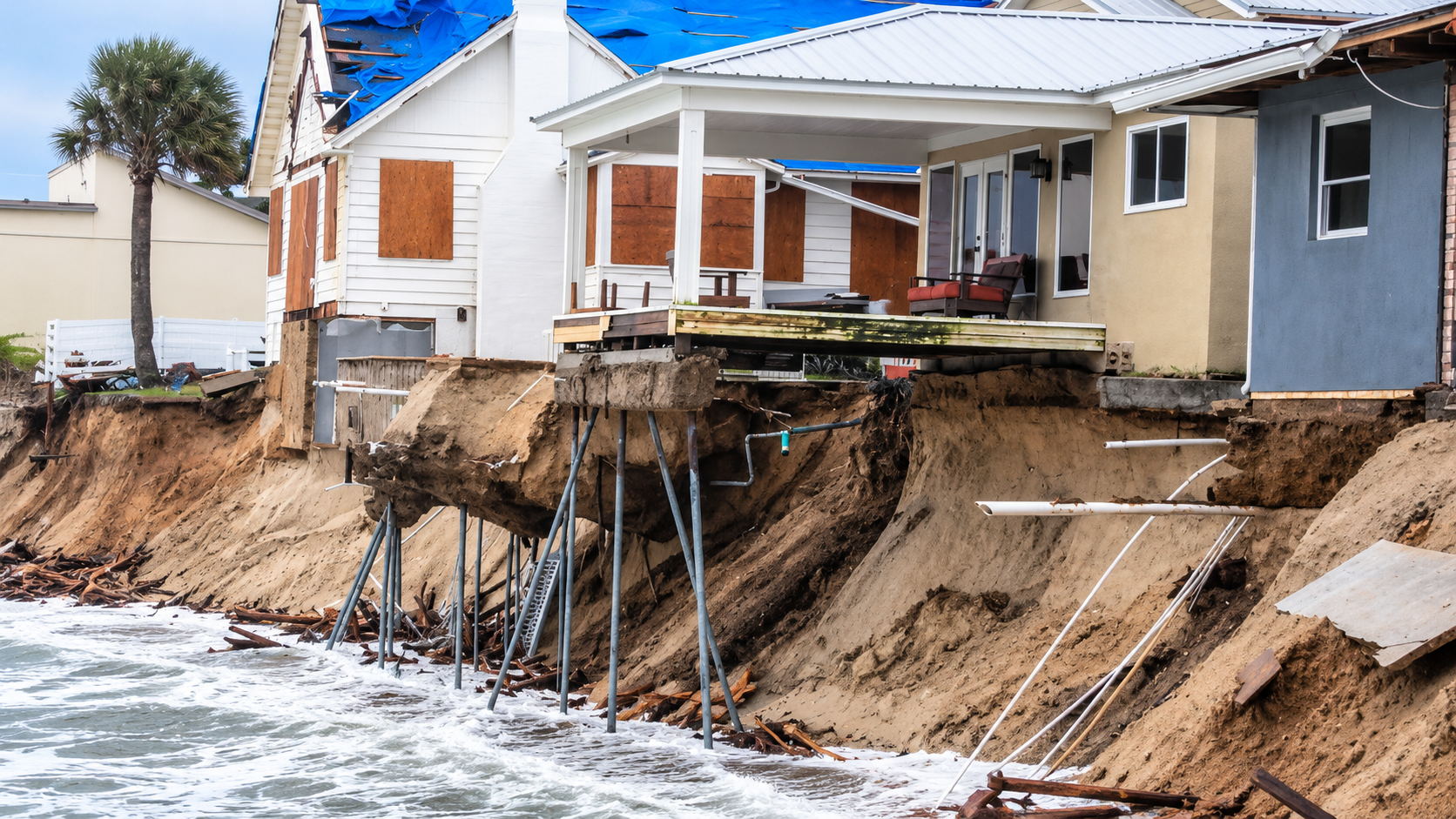
Hurricane Nicole, Wilbur by the Sea, Florida | November 2022 | Reference imagery
STABILIZATION VS LIFTING
The primary purpose of a push pier system is to stabilize the structure and help prevent continued settlement in the
repaired area.
In certain situations, some recovery of elevation may be possible during the load transfer process.
However, attempting to return an older structure completely to its original position can create additional stress on masonry, framing, plumbing, finishes, windows, doors, and other building components.
For that reason, lifting should be evaluated carefully and performed in a controlled manner when appropriate.

PUSH PIERS VS HELICAL PIERS
Push piers and helical piers can both be used for foundation underpinning, but they are different systems.

Push Piers
Push piers are hydraulically advanced using the structure itself as resistance. They are commonly used to stabilize existing structures experiencing settlement.

Helical Piers
Helical piers use steel helix plates that allow the pier to be mechanically advanced into the soil. They can be used for existing foundation stabilization as well as certain new construction and other structural applications.
Neither system is automatically better for every property. Soil conditions, structural loads, foundation configuration, access, project requirements, and engineering considerations can all influence which system is appropriate.
PFR installs both because we believe the repair method should be selected for the structure, rather than selecting the structure for the repair method.
RESIDENTIAL AND COMMERCIAL PUSH PIER INSTALLATION
PFR performs foundation stabilization for both residential and commercial structures.
Our push pier work can range from localized settlement at a residence to larger underpinning projects involving substantial commercial structures.
For more complex projects, PFR can coordinate with property owners, general contractors, structural engineers, geotechnical engineers, architects, property managers, and other project professionals as required.
Our experience performing structural repairs beyond pier installation also gives our team a broader understanding of how foundations, masonry, floor systems, framing, and other structural components interact when movement occurs.
A DIFFERENT APPROACH TO FOUNDATION REPAIR
PFR is not built around one foundation repair system.
We are a specialty structural repair contractor.
Our inspectors see structures in their existing condition and work to understand what is happening and why.
Our production teams see structures opened up and experience firsthand how foundations and structural systems behave during the repair process.
Both sides have knowledge the other side needs.
By sharing that field experience throughout the company, we continue improving how we inspect structures, develop repair scopes, and perform the work.
That approach is especially important with foundation underpinning because the goal is not simply to install steel into the ground.
The goal is to understand the structure above it and provide support where it is actually needed.
THINK YOUR FOUNDATION MAY BE SETTLING?
Cracks, settlement, and structural movement should be evaluated before the problem progresses.
Priority Foundation Repair provides foundation evaluations throughout Virginia Beach, Chesapeake, Norfolk, Suffolk, Portsmouth, Hampton, Newport News, Williamsburg, and surrounding areas.
Whether the project involves a home, commercial property, or a more complicated structural condition, PFR can evaluate the structure and help determine the appropriate next step.

Priority Foundation Repair
Built to Solve Structural Problems